

A Feast for the Eyes Before the First Bite
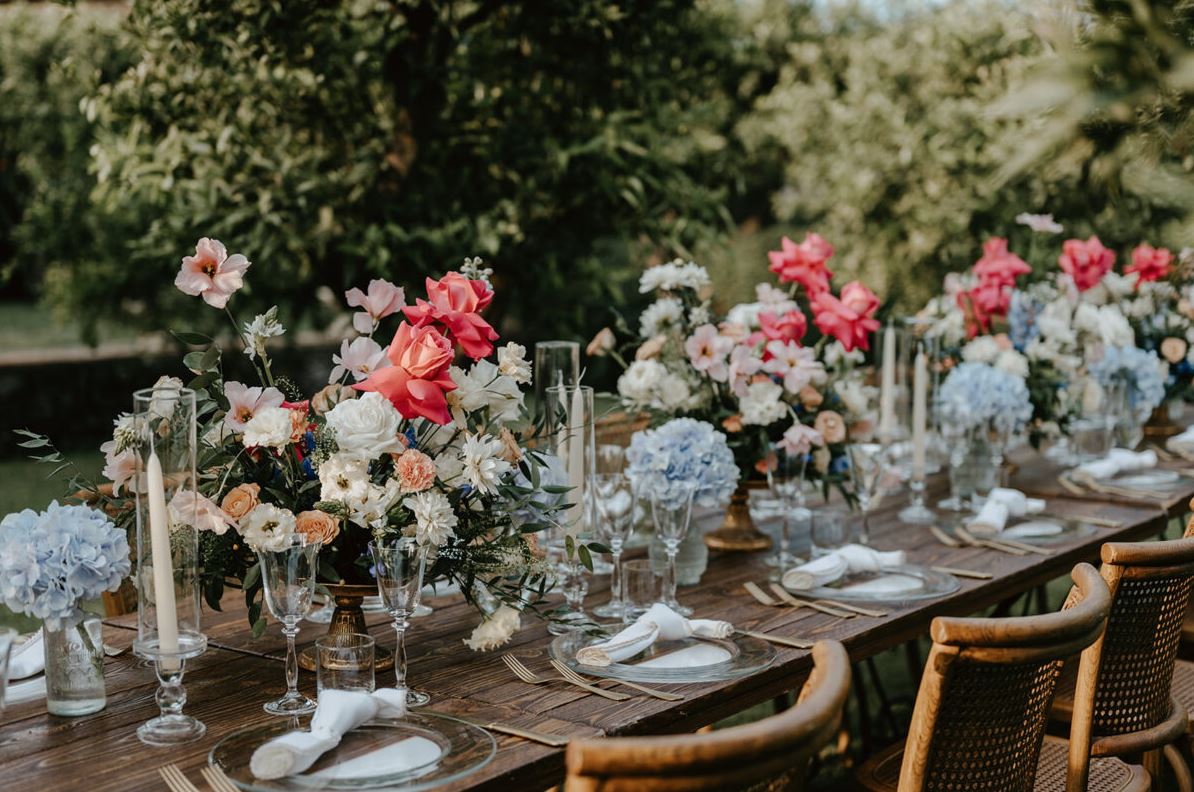
Wedding Table Settings Become the Canvas of Shared Celebration
The First Impression Before the First Bite
Before guests hear the first toast or taste the first dish, they encounter the tablescape. It greets them with its silent language of texture, tone, and form. The arrangement of plates, the glimmer of cutlery, and the placement of flowers are not merely decoration, they are storytelling devices. A table setting captures the essence of a wedding’s aesthetic and emotion in a single glance. It is a stage where design and hospitality meet, transforming dining into experience. Every element, from the linen beneath a glass to the candle above a napkin, contributes to a choreography of elegance. The right setting makes guests feel not only welcomed but immersed, surrounded by beauty that reflects the couple’s vision.
Each table setting carries intention. The distance between plates, the color palette of napkins, even the fold of fabric on the charger plate communicates a certain rhythm. In this way, the table becomes a mirror of the celebration’s character, refined, rustic, or playful. The artistry lies in balance, blending the functional with the poetic. It is not about extravagance but harmony. A table that invites conversation and comfort is far more powerful than one that overwhelms. When designed thoughtfully, a wedding table becomes a moment within the greater moment, a place where aesthetic design embraces emotional warmth.
The Palette That Defines Atmosphere
Color governs emotion, and the palette of a table setting sets the emotional tone for the meal. Whether muted and serene or bold and jubilant, color choices define the environment long before words are spoken. Soft ivory and pale blush evoke tenderness, while deep emerald and gold convey opulence. Modern minimalists may gravitate toward monochrome settings, while romantics embrace pastel gradients that mimic sunrise or garden blooms. The beauty of color in table design is its capacity for layering, tones echo each other across elements, from the floral centerpiece to the napkin hem. Cohesion in hue brings visual serenity, allowing the eye to rest while the spirit delights.
Lighting also interacts with color to alter perception. Candlelight turns white linens creamy and enhances metallic accents with warmth. Under daylight, transparent glasses glisten like crystal sculptures, while under ambient evening lighting, darker palettes gain intimacy. The interplay between light and color makes the table a living canvas. Every reflection shifts subtly as guests move, making the setting dynamic rather than static. This living palette reflects the evolving nature of the event itself, moments of laughter, pause, and togetherness refracted through the glow of shared celebration.
The Geometry of Arrangement
A perfect table setting obeys both mathematics and feeling. The geometry of plates, utensils, and glassware dictates flow, yet emotion softens structure. Precision brings order, but artistry makes it alive. The rule of symmetry remains the foundation: balance on both sides of the plate establishes visual calm. Yet subtle asymmetry, an offset sprig of greenery, a folded napkin tilted slightly, adds character and modern charm. The table must breathe. Too much uniformity feels sterile; too little feels chaotic. True mastery lies in measured irregularity, in the way texture and alignment interplay to keep the eye curious without losing comfort.
Spatial planning extends beyond a single setting. Each table interacts with its neighbors, forming a larger visual pattern across the reception space. Designers often approach the floor plan as a mosaic of circles, rectangles, and flow lines, ensuring that movement between tables remains natural. Guests must feel connected yet unconfined. In essence, geometry does not only apply to physical placement but also to human experience. Every fork and flower contributes to the silent structure of togetherness. The geometry of arrangement is not only visual, it is emotional architecture designed to foster ease and unity.
The Symphony of Texture and Material
Texture is what gives life to the visual. A wedding table’s tactile landscape engages guests beyond sight, inviting them to feel the luxury of fabric or the rough charm of natural materials. Silk napkins drape with grace, while linen introduces organic rhythm. Rustic celebrations might feature woven placemats or ceramic dishes, their imperfections grounding elegance with authenticity. The clink of polished silverware against fine china creates an audible layer, turning dining into an orchestration of sound and sensation. Every texture adds a note to the sensory composition of the wedding day.
Combining contrasting materials can produce stunning results. Glass beside wood, metal against fabric, smooth porcelain next to wild foliage, all highlight one another’s beauty. The goal is not uniformity but conversation between elements. When chosen with care, textures tell the story of the couple’s aesthetic sensibility. A beach wedding may favor shells, driftwood, and light fabrics that mimic wind and sea, while an indoor ballroom setting thrives on velvets, crystals, and metallic finishes. Through texture, the table becomes a microcosm of the wedding’s entire emotional world, where touch and sight harmonize in celebration of connection.
The Role of Centerpieces as Emotional Anchors
No element on the wedding table commands attention quite like the centerpiece. It serves as both heart and anchor of design. Flowers, candles, or sculptural pieces rise from the center as symbols of unity and focus. The challenge lies in achieving balance, grand enough to captivate yet delicate enough to allow conversation across the table. A centerpiece should enhance connection, not obstruct it. Height, proportion, and density determine the mood. Tall arrangements bring drama, while low and lush designs foster intimacy. The surrounding details, petals scattered across linens, votive candles flickering nearby, extend the centerpiece’s reach without imposing dominance.
Modern designers have reimagined centerpieces as experiences rather than mere objects. Some incorporate scent through herbs and blooms that release subtle fragrance. Others use motion, like floating candles or hanging glass orbs, to create a sense of life and wonder. Sustainability has also entered the conversation, inspiring arrangements that can be repurposed after the event. Whether minimalist or abundant, the centerpiece reflects the essence of the couple’s story. It is the table’s heartbeat, pulsing quietly amid the laughter and clinking glasses, reminding everyone that beauty thrives where attention and care converge.
The Dance Between Formality and Freedom
Weddings vary widely in tone, and table settings must adapt to that emotional rhythm. Formal receptions thrive on precision, perfectly aligned utensils, crisp linens, and calculated placements. Each piece obeys etiquette, reflecting tradition and sophistication. Such formality evokes grandeur and ceremony, reminding guests that they are part of something timeless. In contrast, casual or bohemian weddings invite looseness. Plates may vary slightly, glassware might mix materials, and napkins could be tied with wildflowers instead of folded in geometric forms. Freedom introduces authenticity, creating a relaxed elegance that feels spontaneous rather than staged.
Finding the balance between these extremes is an art. Many modern couples favor a hybrid approach, structured enough to convey purpose, yet relaxed enough to invite comfort. A table that allows guests to reach easily, laugh freely, and feel welcomed is one that succeeds. True refinement lies not in rigidity but in intention. Each decision, whether strict or fluid, must serve emotion. The best table settings do not display wealth or skill; they display empathy. They anticipate the guest’s comfort, guiding them toward ease while enveloping them in beauty. That is where formality and freedom find their truest partnership.
The Power of Small Details
Often it is the smallest element that leaves the longest impression. A hand-lettered place card, a sprig of rosemary tucked into a napkin, or a crystal glass catching the candlelight can etch itself into memory. These minute gestures of care signal thoughtfulness. Guests may not consciously note every detail, but they feel its effect, the sense that someone took time to make their presence meaningful. In this way, details become acts of hospitality as much as design. They create the intimacy that transforms a large celebration into a collection of personal moments.
Typography on menus, ribbon hues, or the texture of a charger plate all carry weight. Consistency among these details unifies the design narrative, but slight surprises keep it alive. Perhaps the menu paper has a faint scent of rosewater, or the water glasses feature subtle etching that catches light. Each layer deepens the sensory experience. These details are not mere embellishments; they are the punctuation marks of design, turning visual prose into poetry. The secret lies in coherence, when every small touch feels intentional, guests feel enveloped by the couple’s aesthetic universe without realizing they have entered it.
The Evolution of Modern Table Design
As design trends evolve, table settings continue to adapt to cultural and technological shifts. Sustainability, personalization, and minimalism have reshaped the modern wedding landscape. Many couples now favor reusable materials, eco-friendly linens, or local artisans who craft one-of-a-kind pieces. Instead of uniformity, uniqueness reigns. Some opt for mixed-matched ceramics, vintage silverware, or handcrafted chargers that tell stories of their origins. The table becomes an exhibition of individuality, a reflection of values as much as aesthetics. Technology, too, has influenced design. Programmable lighting can adjust hues throughout dinner, and projection mapping allows dynamic visual storytelling across table surfaces.
Despite these innovations, the essence of the table setting remains timeless. It continues to be an expression of care. The forms may change, but the intent, to gather people beautifully and meaningfully, endures. The evolution of modern design proves that the emotional core of weddings resists passing trends. Whether arranged with antique plates or sleek glassware, a table is always about connection. As the world changes, the act of sitting together, sharing food, and raising a glass remains one of the most human experiences. The table, in every generation, is where love is made visible.
The Table as a Reflection of Love’s Design
When the evening quiets and the candles flicker toward their end, the table stands as the day’s final portrait. Plates are no longer full, and glasses have caught the last remnants of laughter, yet the beauty remains. What began as arrangement becomes memory. The symmetry, the colors, the small gestures, all merge into a single impression of warmth and unity. In its stillness, the table holds the echo of the celebration, reminding everyone that design, when born from love, transcends function. A wedding table is not simply where meals are served; it is where stories are shared, where connection deepens, and where beauty finds its quiet home. Long after the music fades, the table remains, a silent witness to joy, reflecting the gentle truth that love, like art, is always in the details.